> For the complete documentation index, see [llms.txt](https://docs.assetchain.org/llms.txt). Markdown versions of documentation pages are available by appending `.md` to page URLs; this page is available as [Markdown](https://docs.assetchain.org/general-info/contract-verification.md).
# Contract Verification
Lets verify smart contracts on Asset Chain.
Pro tip: If you deployed your contract with Hardhat, use the Hardhat guide to verify it.
{% hint style="info" %}
Note: from solidity compiler version ^0.8.20 won’t verify successfully.
{% endhint %}
## With Advanced Explorer
**Get Started**
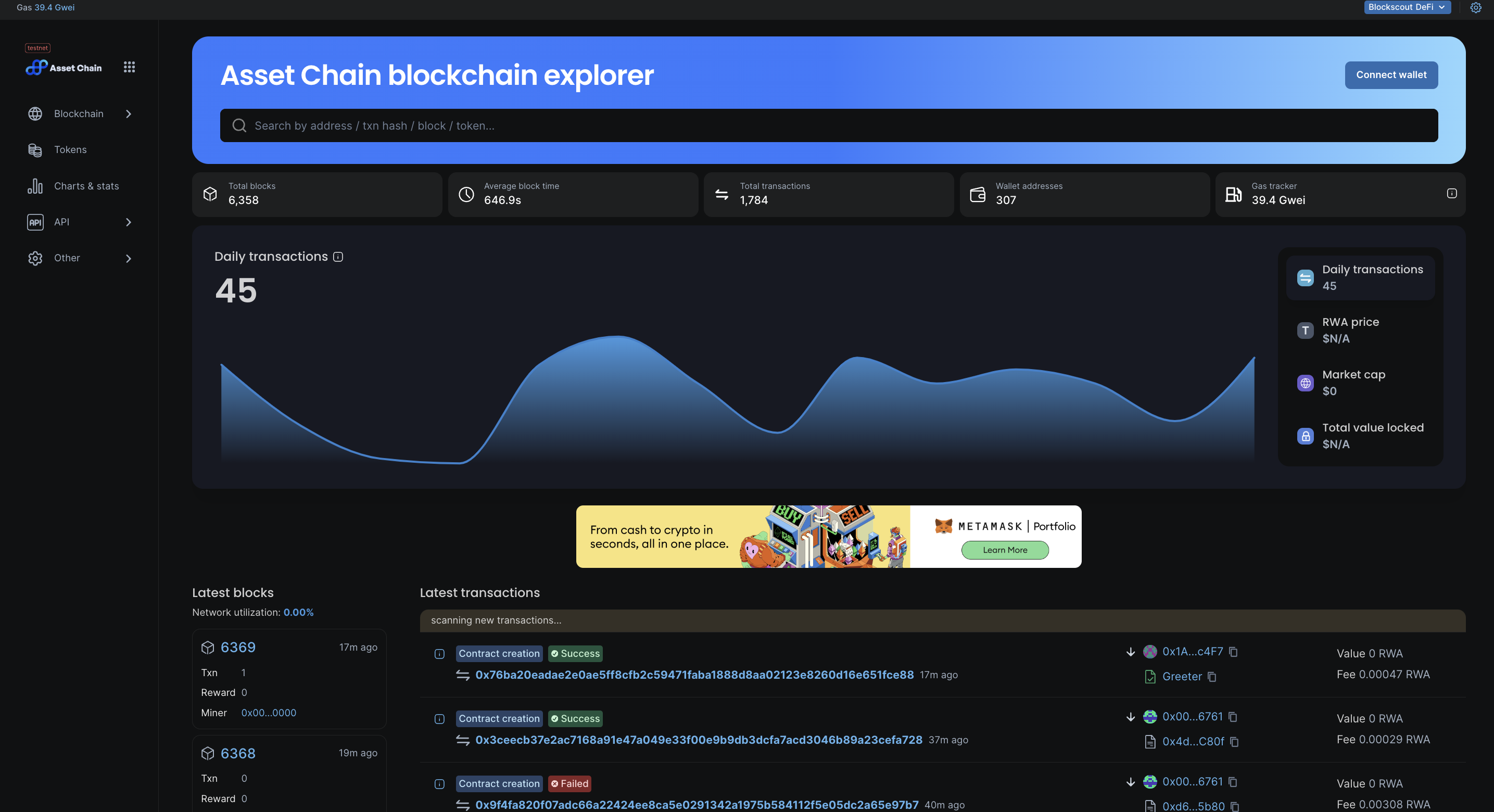
1. Visit the [Asset Chain Advanced Explorer](https://scan-testnet.assetchain.org/)
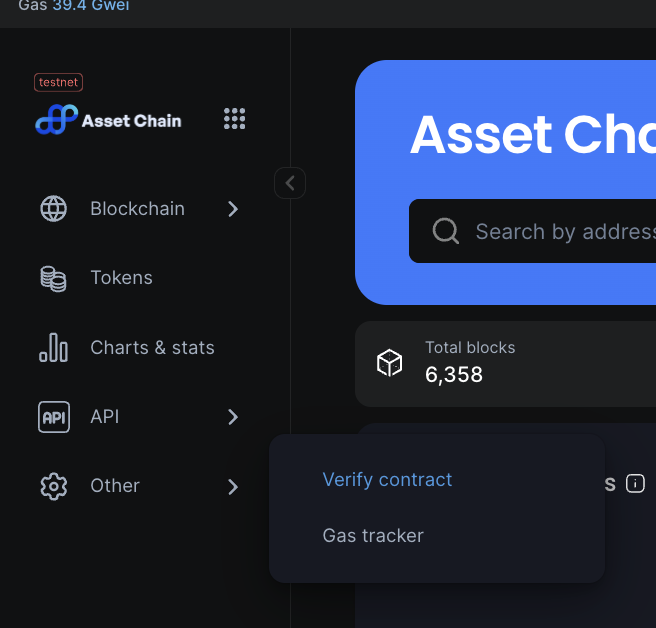
2. On the Sidebar, hover on the \`Other\` link and click on \`verify contract\` link.
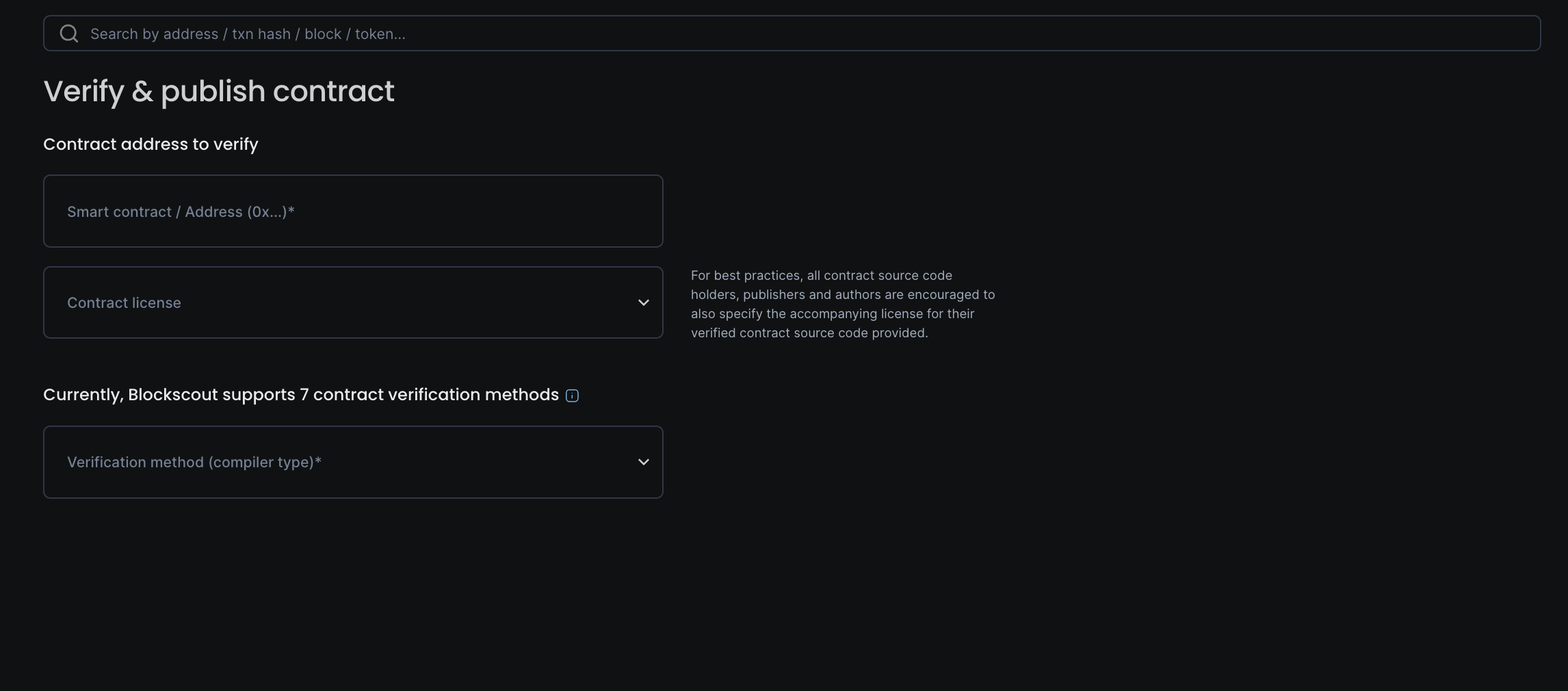
3. Clicking verify contract\` should open up a form similar to the one below. Proceed to enter the parameters with which you compiled your contract.
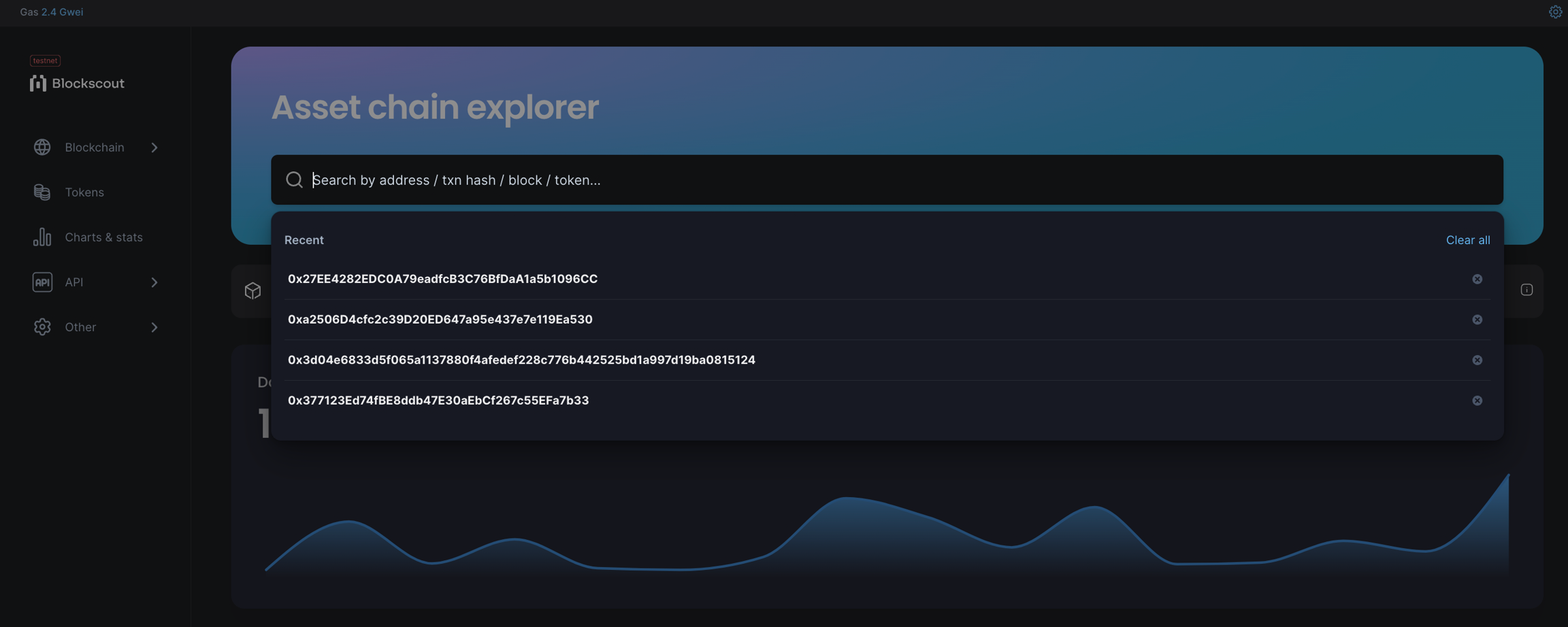
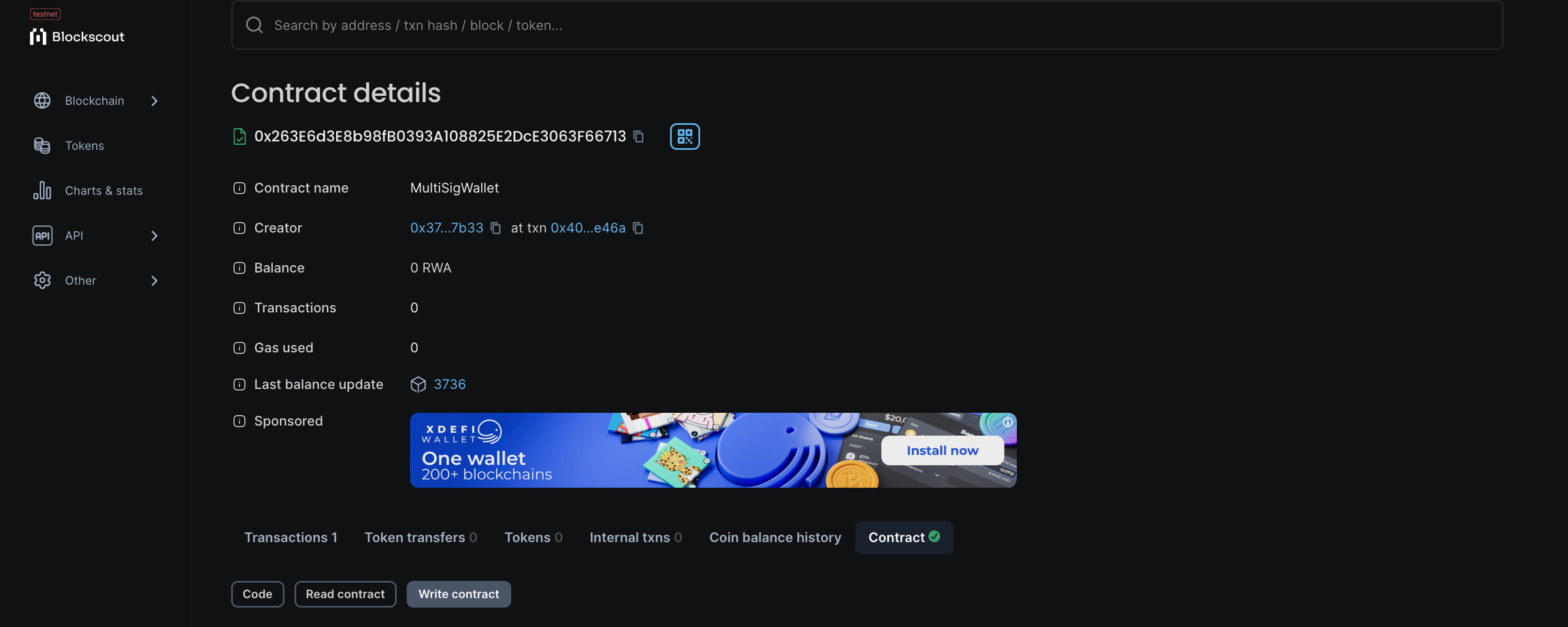
4. If you submitted the form successfully, your contract has been verified. Visiting the contract page, you should see a page similar to the one below; with an alert showing verified, and your contract code being displayed.
## With Hardhat
[Hardhat ](https://hardhat.org/)is a full-featured development environment for contract compilation, deployment and verification. The [Hardhat Etherscan plugin](https://hardhat.org/plugins/nomiclabs-hardhat-etherscan.html) supports contract verification on BlockScout.
#### Get Started
1. **Install Hardhat**
If you are starting from scratch, create an npm project by going to an empty folder, running `npm init`, and following the instructions. Recommend npm 7 or higher.
Once your project is ready:
**NPM instructions**
```bash
npm install --save-dev hardhat
```
**YARN instructions**
```bash
yarn add --dev hardhat
```
2. **Create a project**
Run `npx hardhat` in your project folder and follow the instructions to create ([more info here](https://hardhat.org/getting-started/#quick-start)).
3. Install plugin
Install the [hardhat-etherscan plugin](https://hardhat.org/plugins/nomiclabs-hardhat-etherscan.html) (requires **v3.0.0+).**
**npm**
```bash
npm install --save-dev @nomicfoundation/hardhat-verify
```
**yarn**
```bash
yarn add --dev @nomicfoundation/hardhat-verify
```
4. Add plugin reference to config file
Add the following statement to your `hardhat.config.js`.
```javascript
require("@nomicfoundation/hardhat-verify");
```
If using TypeScript, add this to your `hardhat.config.ts.` [More info on using typescript with hardhat available here](https://hardhat.org/guides/typescript.html#typescript-support).
```javascript
import "@nomicfoundation/hardhat-verify";
```
#### Config File
Your basic [Hardhat config file](https://hardhat.org/config/) (`hardhat.config.js` or `hardhat.config.ts`) will be setup to support the network you are working on. In this example we use the Asset Chain test network and a `.js` file.
Asset Chain is not directly supported by the plugin (to check run `npx hardhat verify --list-networks`)
But we can add it in a `customChains` object, to the config file. It includes:
* `chainID` - 42421
* `apiURL` - ""
* `browserURL` - ""
{% hint style="info" %}
The network name in `customChains` must match the network name in the `apiKey` object.
{% endhint %}
```json
require("@nomicfoundation/hardhat-verify");
let secret = require("./secret");
module.exports = {
solidity: "0.8.9",
networks: {
localhost: {
url: "http://127.0.0.1:8545/",
accounts: [secret.key],
}
},
etherscan: {
apiKey: {
assetchain_test: "abc"
},
customChains: [
{
network: "assetchain_test",
chainId: 42421,
urls: {
apiURL: "https://scan-testnet.assetchain.org/api",
browserURL: "https://scan-testnet.assetchain.org/"
}
}
]
}
};
```
#### Deploy and Verify
#### Deploy
```bash
D:\hard_hat> npx hardhat run scripts\deploy.js --network assetchain_test
Contract deployed to: 0x8595e22825Ba499dB8C77C5c830c235D80f9C0fa
```
#### Verify
You can include constructor arguments with the verify task.
{% hint style="info" %}
For info on more complex constructor arguments(arrays, tuples..) please [visit here](https://hardhat.org/hardhat-runner/plugins/nomicfoundation-hardhat-verify#complex-arguments).
{% endhint %}
Example (no constructors).
```sh
D:\hard_hat>npx hardhat verify --network assetchain_test 0x263E6d3E8b98fB0393A108825E2DcE3063F66713 --constructor-args ./scripts/arguments.js
[INFO] Sourcify Verification Skipped: Sourcify verification is currently disabled. To enable it, add the following entry to your Hardhat configuration:
sourcify: {
enabled: true
}
Or set 'enabled' to false to hide this message.
For more information, visit https://hardhat.org/hardhat-runner/plugins/nomicfoundation-hardhat-verify#verifying-on-sourcify
Successfully submitted source code for contract
contracts/MultiSigWallet.sol:MultiSigWallet at 0x263E6d3E8b98fB0393A108825E2DcE3063F66713
for verification on the block explorer. Waiting for verification result...
Successfully verified contract MultiSigWallet on the block explorer.
http://scan-testnet.assetchain.org/address/0x263E6d3E8b98fB0393A108825E2DcE3063F66713#code
```
#### Confirm Verification on BlockScout
Go to our BlockScout Explorer and paste the contract address into the search bar.
Scroll down to see verified status. A green checkmark ✅ means the contract is verified.
You can now scroll down in the explorer to see and interact with the contract code.
{% hint style="success" %}
Congratulations! Your contract is successfully verified on Asset Chain Explorer.
{% endhint %}
###